What Flock Safety Actually Does, and Why Nobody Can Agree About It.
An examination of the arguments for and against automated license plate readers, and the questions neither side has answer by Nolin Investigations.
Introduction: A Fight Without a Referee
In August 2026, a Republican senator from Missouri opened a formal investigation into a private surveillance company. Two weeks earlier, that same company had announced a sweeping set of new privacy controls. A month before that, a libertarian public-interest law firm published a tally of twenty-seven innocent motorists pulled over, held at gunpoint, or jailed because a camera misread a license plate. In the same window, police departments in Texas, Arizona, Massachusetts, Illinois, and North Carolina voted to tear their cameras down, while other departments announced they had solved homicides with them.
The company is Flock Safety. It operates, by Senator Josh Hawley's accounting, more than 120,000 cameras across 49 states, processing more than 20 billion vehicle scans every month. "The overwhelming majority of the Americans captured in those records did nothing wrong," Hawley wrote to CEO Garrett Langley, demanding documents by September 8, 2026.
That sentence is the entire debate compressed into eighteen words. Everyone agrees it is true. What they disagree about is whether it matters.
This piece lays out both cases as strongly as they can be made, examines the specific structural questions that neither side has satisfactorily answered including several that matter enormously to anyone working in criminal defense investigation surveys the case law, and addresses one question that comes up constantly in conversation and deserves a direct answer.
Part One: What Flock Actually Is
Understanding the argument requires understanding the machine, because most of the disagreement turns on technical details that get flattened in public debate.
Flock Safety was founded in 2017 by Georgia Tech alumni Garrett Langley, Paige Todd, and Matt Feury. It is a private, venture-backed company valued at roughly $8.3 billion, with approximately $500 million in annual recurring revenue as of mid-2026, backed by Andreessen Horowitz, Tiger Global, Founders Fund, Kleiner Perkins, and Y Combinator. It is not a government agency. It is not a government contractor in the traditional sense. It leases cameras.
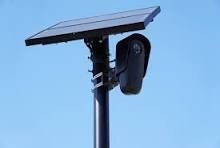
Its core product is the Falcon, a solar-powered fixed camera that photographs every vehicle passing it and extracts the license plate through optical character recognition. But the plate is not the only thing captured. Flock's "Vehicle Fingerprint" technology also logs make, model, color, body type, and distinguishing features — roof racks, bumper stickers, damage, ladder racks. This matters enormously, and we will return to it.
Around that core, Flock has built out: Condor pan-tilt-zoom cameras, Raven audio gunshot detection, Aerodome drone-as-first-responder (acquired October 2024), and Nova, a people-search and data-fusion platform that joins plate reads to external personal data sources.
Three architectural features drive nearly every controversy:
The searchable history. A read is not a momentary event. It is a database row: plate, timestamp, GPS coordinates, direction, vehicle description, photograph. Those rows are retained and are searchable backward in time. Until August 2026 the default retention was 30 days; Flock has now reduced the default to 7 days, with an "Evidence Mode" that preserves specific data for active investigations. Agencies can and do configure longer. Dallas has planned year-long retention. San José retained for a year before reducing to 30 days.
The network. Flock's "National Lookup" allowed an agency to search other agencies' cameras nationwide, on a reciprocity model contribute your data, search everyone else's. Agencies could also establish direct one-to-one sharing relationships. El Cajon, California maintained direct sharing with more than 300 out-of-state agencies. A single search from one deputy's desk could, and did, reach 6,809 networks and 83,345 cameras.
The audit log. Every search generates a log entry: agency, user, timestamp, networks reached, and critically, a reason. For most of Flock's history, that reason field was free text with no validation. As Ruby Cherian of the Legal Aid Justice Center put it: "Right now, anyone can type in anything into that open ended field to pull up the data." Flock has announced that case codes will be mandatory for all law enforcement searches by the end of 2026, with an emergency bypass that flags the search for review.
That audit log is the hinge of this entire story. It is simultaneously the only accountability mechanism in the system and the primary evidence of the system's abuse — because nearly every documented scandal was discovered by someone reading those logs.
Part Two: The Case For
It solves crimes, and the specific cases are real
This is the strongest thing the pro-ALPR side has, and it should not be dismissed. In Colorado between September 2025 and February 2026, six abducted children were recovered in cases where license plate readers were used to locate the vehicles: a teenager recovered in Thornton after an AMBER Alert; a 13-year-old girl abducted in Utah found near Fort Collins; a 14-month-old recovered in Aurora in under ten minutes. Albuquerque police attribute thirteen or fourteen solved homicides in 2026 to plate readers. Jacksonville's sheriff's office publicly defended its system in August 2026 by citing murders solved.
Flock claims roughly a million police investigations aided in the past year and approximately 10,000 missing people located.
Cleveland offers the most carefully documented example, precisely because it is mixed. The city's Department of Public Safety compared closure rates for robbery, felonious assault, assault, and burglary before and after camera deployment: 15.5% to 18.7%. The Cuyahoga County Prosecutor submitted 139 case examples in which readers "helped detectives identify suspect vehicles" notably declining to claim the technology solved them.
The honest empirical picture
Here the pro-camera side must concede something, and the concession is more persuasive than the marketing.
Flock's most-repeated statistic that "10% of all reported U.S. crime is solved using Flock" does not hold up well. It came from a 2023 survey of 123 agency respondents, conducted by Flock employees with outside academic oversight, then extrapolated to Flock's entire customer base without published methodology. Johnny Nhan, the Texas Christian University researcher who provided that oversight, later distanced himself, telling 404 Media that "the information that is collected by the police departments are too varied and incomplete for us to do any type of meaningful statistical analysis on them."
The serious literature tells a more restrained story. A 2025 review in the Cambridge Journal of Evidence-Based Policing by Lum, Koper, Lee, Nagin, and Sherman — an unusually heavyweight author list found that multiple randomized trials showed "limited effects of ALPRs on crime outcomes." Readers "may increase stolen vehicle recoveries but not necessarily arrests." Randomized hot-spot experiments in Alexandria and Fairfax County, Virginia found no statistically significant crime reduction. A randomized trial in Mesa, Arizona found that scanning more plates does not by itself predict lower vehicle theft.
But that same 2025 review contains the number that most helps the pro-camera case: when readers were used in an investigation, roughly 19% of those cases cleared against a baseline that is far lower for most property and vehicle crime. The catch is that readers were used in only about 1% of investigated cases.
The honest version of the pro-Flock empirical argument is therefore investigative, not preventive. These cameras do not appear to deter crime. They appear to help solve a small number of cases, sometimes dramatically. Whether that is worth the cost is a value judgment, not an empirical one — and the pro-camera side is on firmer ground admitting that than defending the 10% figure.
The "nothing to hide" argument, stated at its strongest
The most common defense is also the most caricatured: if you're not doing anything wrong, this shouldn't bother you.
Stated carelessly, it is weak. Stated carefully, it is not:
Your license plate is a state-issued identifier that you are legally required to display in public, precisely so that you can be identified. It is not private information; it is compelled public information. A police officer parked on the same corner could write it down. A neighbor could photograph it. A camera doing the same thing, automatically, does not create a privacy interest that did not previously exist. Meanwhile, the alternative to a camera is not the absence of policing it is more pretextual traffic stops, more roving patrols, more officer discretion applied to who looks suspicious. A camera does not profile. It reads every plate identically. If you are worried about discriminatory policing, an automated system that treats a Mercedes and a Civic the same way is arguably an improvement.
Add to that: these systems are adopted by elected city councils in public votes, subject to public comment, and can be, and increasingly are canceled by the same process. That is democratic accountability functioning, not failing.
The legal doctrine is, so far, on Flock's side
This is not a close question in the current case law, and anyone arguing otherwise is describing the law they want rather than the law that exists.
The foundational line comes from United States v. Knotts, 460 U.S. 276 (1983): "a person traveling in an automobile on public thoroughfares has no reasonable expectation of privacy in his movements." Courts have consistently held there is no privacy expectation in a publicly displayed plate, United States v. Ellison, 462 F.3d 557 (6th Cir. 2006), among others.
Applied to Flock specifically:
- Commonwealth v. Church, Va. Ct. App. (Oct. 14, 2025): no warrant required to query the Flock database. "The Flock system provides only short-term monitoring of a vehicle's movements on public thoroughfares."
- State v. Simonson, Wash. Ct. App. (Jan. 29, 2026): fixed ALPR photography is not a search "akin to an officer manually noting a license plate number." Notable because Washington's state constitution is normally more protective than the Fourth Amendment.
- Schmidt v. City of Norfolk, E.D. Va. (Jan. 27, 2026): after a bench trial, judgment for the city. Chief Judge Mark Davis held that 176 cameras in 75 clusters with a 21-day window cannot capture "the whole of a person's movements." "An individual scan of a license plate, a vehicle identifier that generally must be displayed under state law, does not invade any privacy interests."
- United States v. Porter, 5th Cir. (2026): ALPR collection did not violate the Fourth Amendment; the court distinguished cell-site location data because readers capture "sporadic images of a vehicle's publicly displayed plate as it travels on public roads."
The Department of Justice filed a Statement of Interest supporting Norfolk in September 2025, and an amicus supporting the Illinois State Police in the Seventh Circuit in July 2026 — arguing in both that ALPR is not a search.
And Flock has, under pressure, tightened the system
Whatever one thinks of the motivation, the August 13, 2026 changes are substantive: default retention cut from 30 days to 7; mandatory multi-factor authentication (implemented early August 2026); mandatory Audit Assistance anomaly detection for all law enforcement customers by end of 2026; Proactive Lockout automatically suspending accounts that trip abnormal-behavior criteria; mandatory case codes by end of 2026; offense filtering letting a city permit stolen-vehicle searches while blocking immigration searches; an independent security review by Bishop Fox with findings due September 2026; and transparency portals now published by more than 1,500 agencies.
Flock also notes, correctly, that an alert is a lead: "An alert is a lead, not a conclusion, which should be confirmed by an officer." Low-confidence reads are flagged and not sent as alerts.
Part Three: The Case Against
Warrantless searches, with no judge in the loop
The central objection is structural, not anecdotal. A police officer can query a nationwide database of vehicle movements without a warrant, without probable cause, without reasonable suspicion, without notifying anyone, and without any judicial officer ever reviewing the request. The only check is a form field.
Compare this to almost any other investigative technique of similar power. A wiretap requires a warrant plus a showing that other methods failed. A search of a phone requires a warrant under Riley v. California. Historical cell-site location data requires a warrant under Carpenter. A GPS tracker on a car requires a warrant under United States v. Jones.
Retrospective location tracking of every vehicle in a city requires a text box.
It also happens outside the presence of an officer, and outside the presence of the person searched. There is no encounter, no notice, no opportunity to object at the time or afterward. Whatever else it is, it is not the kind of policing the Fourth Amendment was drafted with in mind.
Mass location tracking of overwhelmingly innocent people
The California State Auditor's 2019 report found LAPD storing 320 million images, of which 99.9% were of vehicles not on any hot list. The EFF cites the figure that 99.5% of scans involve people with no connection to criminal activity. The ACLU puts it at less than 1%.
Norfolk police, according to allegations in the Schmidt litigation, used the system to track a single driver 526 times in four months. San José, at the time of the IJ class action, ran roughly 15,000 searches per day.
The mosaic objection is that a location record is not meaningfully anonymous. Where a car sits overnight identifies its owner's home. Where it sits Sunday morning identifies their religion. Repeated visits to a medical building, a union hall, a lawyer's office, a shelter, a bar, a gun range, or a political meeting are each individually innocuous and collectively a portrait.
Normalization by installation
The count went from roughly 4,000 communities in 2024 to 5,000 in May 2025 to 100,000 cameras in June 2026 to 120,000-plus by August 2026. Nobody voted on that trajectory. Each city voted on its own cameras; the network effect was the product design.
And when cities do leave, they frequently substitute rather than abandon. 404 Media reported in August 2026 that cities dropping Flock were "immediately replacing it with Axon license plate readers" Denver being the flagship example, approving a one-year, $150,000 Axon contract in March 2026 over ACLU objections. If your objection is to mass ALPR rather than to one vendor, canceling a Flock contract may accomplish very little.
Cross-agency sharing that broke state law
This is where the objection stops being theoretical.
Illinois. In August 2025, Secretary of State Alexi Giannoulias announced that a sample audit of twelve law enforcement agencies found Flock in violation of Illinois law. The company had allowed U.S. Customs and Border Protection access to Illinois cameras through a pilot program running afoul of the Illinois TRUST Act and a 2023 state law barring ALPR data use for immigration enforcement or out-of-state abortion investigations. Giannoulias ordered CBP access shut off. Langley conceded: "We clearly communicated poorly. We also didn't create distinct permissions and protocols in the Flock system to ensure local compliance for federal agency users." A follow-up audit in September 2025 caught the Forest Park Police Department sharing with CBP.
California. SB 34 bars sharing ALPR data with federal or out-of-state agencies; Attorney General Rob Bonta issued a bulletin in October 2023 making that explicit. CalMatters found more than 100 violations in May 2025 alone, out of approximately 491,000 logged queries in a month — with recipients including ICE, CBP, and Border Patrol. In October 2025 Bonta sued the City of El Cajon for sharing with agencies in 27 states after prior written warnings. In June 2026, an SFPD audit found 299 illegal inquiries into San Francisco's network over one year by federal and out-of-state agencies including the DEA, IRS, U.S. Marshals, and out-of-state police.
Washington. The University of Washington Center for Human Rights obtained records from 35 agencies and identified three access pathways, a taxonomy worth knowing: the front door (an agency deliberately enables federal sharing eight Washington agencies did so with Border Patrol in 2025); the back door (a federal agency searches networks that never authorized it Border Patrol ran thousands of searches against at least ten such agencies between May and August 2025); and the side door (a local officer runs the search on the federal agency's behalf).
Federal access without contracts. ICE had no formal contract with Flock. It didn't need one. 404 Media's May 2025 reporting, based on Danville, Illinois audit logs obtained through a public records request, found more than 4,000 nation- and statewide lookups conducted for federal purposes, with reason fields reading "immigration," "ICE," "ICE+ERO," "illegal immigration," "ICE WARRANT." Senator Ron Wyden's October 2025 findings documented approximately 200 CBP searches and 175 HSI searches through Flock pilots, with the Secret Service and Naval Criminal Investigative Service also participating. Wyden said Flock had assured police it "does not provide access to the Department of Homeland Security" while that access existed; Flock conceded that "due to internal miscommunication, customers were inaccurately informed."
In one Illinois case, a DEA agent used a Palos Heights detective's login to run two dozen searches, every one with the stated reason "immigration violation." The detective's explanation: "When I shared my account with the Special Agent, I believed it would only be used for DEA/narcotics related investigations."
One contested case deserves careful handling. In May 2025, 404 Media reported that a Johnson County, Texas sheriff's office search for a woman who had a self-managed abortion queried more than 83,000 cameras nationwide, including in states where abortion is legal. In August 2026, Langley told law enforcement audiences the story was "entirely false" and that the woman "could never have been under investigation." 404 Media responded with court records indicating Texas authorities discussed potential charges the same day as the search, that the file was categorized as a death investigation rather than a welfare check, and that the search occurred more than two weeks after the abortion. A reader should know this is disputed on the record between the company's CEO and the outlet that reported it, and should evaluate the underlying documents rather than either characterization.
Police using the database against private citizens
In August 2026, the Washington Post published an investigation by Drew Harwell, Douglas MacMillan, and Aaron Schaffer documenting at least 50 cases nationwide of officers charged with or accused of misusing Flock 26 of them involving officers surveilling intimate or romantic partners.
The narrative center of that reporting is Marci Bakely of Jefferson, Georgia, whose ex-boyfriend Michael Steffman the local police chief ran roughly 600 queries on her. She sought a restraining order and was denied, because she could not prove ongoing abuse in real time. She had no access to the surveillance records that would have proved it.
Others: a Milwaukee officer, 179 unauthorized searches in two months. A Kansas police chief tracking his estranged wife. A Riverside County officer convicted on ten charges, sentenced to six years. Five former Albany, Georgia officers arrested in July 2026; eighteen officer arrests in Georgia alone. Four Massachusetts departments under investigation as of August 2026, including an Abington officer who ran 88 searches on one resident over seven days, logging the reason as "suspicious activity." A former Holiday Hills, Illinois police chief charged over nearly 300 unauthorized searches. And in August 2026, CNN reported a Kentucky officer arrested for tracking an ex-girlfriend over 2,000 times.
Langley's response: "We're not going to change humans, and humans make bad decisions."
That is true, and it is also the point. The question is not whether officers will misuse tools, of course some will, but whether a tool should exist that converts one bad decision into a nationwide movement history of a specific person, retrievable in seconds, with the victim structurally unable to access the proof.
Political and expressive targeting
A distinct category, and in some ways more troubling than the stalking cases. From EFF's analysis of a dataset covering more than 12 million searches by more than 3,900 agencies between December 2024 and October 2025:
- Hundreds of searches tied to political demonstrations, the 50501 protests, Hands Off, and No Kings. Nineteen agencies ran searches tied to No Kings alone.
- Delaware State Police ran nine queries connected to an animal-rights organization.
- More than 80 agencies used search language perpetuating stereotypes against Romani people, including slurs, often with no crime named.
In January 2026 in Lenexa, Kansas, police used plate readers to track Canyen Ashworth after he published an op-ed criticizing the department's role in ICE operations. Internal emails obtained by KCUR show a BOLO issued without an arrest warrant, instructing officers to "build your own probable cause"; the chief wrote "This is MYOC" make your own case.
Errors that put innocent people at gunpoint
The Institute for Justice documented at least 27 cases since 2018, the majority since 2023, spanning 24 states, in which innocent motorists were pulled over, held at gunpoint, or jailed due to reader errors. Roughly two-thirds involved officers drawing weapons.
- Sherwood, Arkansas, February 2026: a couple detained at gunpoint with a six-week-old infant after a single misread digit.
- San Diego, November 2025: a man jailed nearly a month after the wrong red Alfa Romeo was identified by vehicle signature rather than plate, an error mode that has nothing to do with plate legibility.
- Morristown, Tennessee, June 2024: grandparents detained at gunpoint after the camera confused a letter "O" with a zero.
- Toledo, Ohio, April 2024: a driver detained at gunpoint after a "7" was misread as a "2."
IJ's attribution: about one-third machine error, two-thirds human error, bad data entry, stale hotlists, misread results. Oak Park, Illinois, one of the few jurisdictions publishing regular error reports, found that one-third or more of camera-prompted stops ended in release due to data problems.
The arithmetic that anchors this: Flock states it accurately captures "93 out of every 100 license plates." At 20 billion scans per month, a 93% rate implies more than a billion inaccurate readings monthly. Most are harmless. Some end with a rifle pointed at a car seat.
Security failures
In December 2025, technologist Benn Jordan and security researcher Jon Gaines found at least 60 Flock Condor cameras live-streaming to the open internet with no authentication, live feeds, 30 days of archived video, and administrator control panels. Jordan: "without any username, without any password, we were just seeing everything from playgrounds to parking lots."
In November 2025, Representative Krishnamoorthi and Senator Wyden asked the FTC to investigate, citing at least 35 customer accounts whose passwords had been stolen by hackers and the absence of any multi-factor authentication requirement. (Note: as of this writing there is no public evidence the FTC opened an investigation what exists is the request. MFA became mandatory in August 2026.) In June 2026, 404 Media reported that officers' plate searches and stated reasons had been indexed by DuckDuckGo and Bing.
Private cameras, public policing
Flock does not only sell to police. It leases to businesses, HOAs, and community organizations, whose owners may share their feeds with law enforcement. Landlords in Los Angeles have built private networks. The Amazon Ring partnership, announced October 2025 and canceled in February 2026 after backlash to a Super Bowl advertisement, would have extended the same logic to doorbell cameras. In August 2026, 404 Media reported a Flock pitch proposing dashcams in roughly 350,000 Uber, Lyft, and delivery vehicles turning the rideshare fleet into a moving scanner network.
The objection here is not that private parties may not own cameras. It is that a private camera whose feed is routinely searchable by police, under a police-facing product, begins to function as a government surveillance node without any of the constraints that attach to a government surveillance node, no public procurement vote, no retention statute, no records law, no policy manual, no Monell liability.
Mission creep
The Falcon reads plates. Nova joins those reads to people-search data, data brokers, and public records approximately 20 toggleable sources. Internal Flock messages leaked to 404 Media in May 2025 showed employees questioning the ethics of ingesting hacked data; Flock announced days later that Nova would not use data from known breaches. Raven listens. Aerodome flies. The pitch quoted from internal material: "You're going to be able to access data and jump from LPR to person and understand what that context is, link to other people that are related."
Part Four: The Questions Neither Side Answers Well
Everything above is contested but documented. What follows are structural questions where the record is genuinely thin and where, in this investigator's view, the most important work remains to be done.
Question 1: Why isn't this governed like NCIC?
This is the sharpest question in the whole debate, and it has a real answer that almost nobody states plainly.
When an officer queries the FBI's National Crime Information Center, or the Interstate Identification Index, or a state system like Florida's FCIC or Texas's TCIC/TLETS, that query happens inside a governance regime built over decades:
NCIC / III / FCIC / TCICFlockWho owns the systemGovernment (FBI or state DPS)Private vendor; agency owns its dataPurpose codeStatutorily mandated (III requires stating the purpose)Product feature; mandatory only from end of 2026, with emergency bypassAuditState CJIS Systems Agency audits, FBI audits, triennial cycleVendor-provided logs; agency self-audit; anomaly detection mandatory end-2026PersonnelFingerprint background check, security awareness trainingAgency-dependentSanction for misuseLoss of system access; criminal penaltyVendor lockout; agency disciplineRetentionGoverned by file rulesVendor-configurableSecondary disseminationLogged, minimum one year (Texas)Logged by vendor
Why the difference? Because of a jurisdictional line that Florida, to its credit, has written down. The FDLE CJIS/FCIC Council's ALPR Guidelines, revised November 2024, provide that ALPR systems "utilizing the Extract or performing secondary queries of state and national systems" that access personally identifiable information or criminal justice information must comply with the FBI CJIS Security Policy — and that systems without such queries do not require that conformance.
Read that carefully. Comparing a plate against an NCIC hot file is a CJIS transaction. Searching Flock's own private image database for where a car has been is, under that framework, not necessarily one. The image was not obtained from a government system. It was created by a private camera. The governance therefore falls out of the CJIS regime and into a contract.
The Congressional Research Service reached a parallel conclusion from the federal side in 2024: there is no comprehensive federal framework, and "DOJ does not appear to have a publicly available policy specifically guiding federal law enforcement use of ALPRs."
Flock does claim CJIS compliance — background-checked employees, signed CJIS Security Addendum, AWS GovCloud hosting, FIPS 140-2 validated encryption, and auditing of all access retained for a minimum of one year. Those are real commitments. But there is a difference between a vendor asserting compliance in a document and a query being subject to a statutory purpose code enforced by an audit authority with the power to revoke access. The first is a promise. The second is a regime.
This is the governance gap, stated precisely: Flock searches are governed by contract and product design, not by the criminal justice information architecture that governs functionally equivalent queries. That is not an accusation of bad faith. It is an observation that the law never contemplated a private nationwide movement database and has not caught up.
Question 2: Why doesn't the data auto-delete?
Increasingly, it does — but only because vendors and a handful of legislatures decided so, not because any general legal rule requires it.
There is no federal retention mandate. The CRS says so explicitly. State law is a patchwork:
Jurisdiction Rule
New Hampshire Purged within three minutes unless it produces a hithe most restrictive in the country
Maine 21 days
Virginia (2025 law)System data purged after 21 days; audit data retained 2 years
Illinois Archived after 90 days; up to 5 years if tied to an investigation
Florida (guidance)30 days tactical; up to 3 years investigative
California No statewide default retention period — policy requirements only
Flock default 7 days as of August 13, 2026 (previously 30)
But the honest answer to "why not auto-delete immediately" is that retention is the entire investigative value. New Hampshire's three-minute rule converts a plate reader from a database into an alerting device. It will catch a stolen car driving past right now. It will do nothing for a homicide detective who gets the case three days later. Every one of those Colorado child-recovery cases involved looking backward in time.
So the retention debate is a genuine trade-off, not a case of obvious bad faith, with one important empirical wrinkle. The California State Auditor found that while agencies retained images for one to five years, searches typically accessed images that were zero to six months old. That is the best available evidence that very long retention buys little and costs a lot, and it is why Flock's own data ("over 90% of searches without a full plate are done within a week") is a defensible basis for a 7-day default.
Question 3: Can you make a records request? Sometimes. Then the legislature closes the door.
Here the pattern is striking enough to be its own story.
In November 2025, Skagit County Superior Court held in City of Sedro-Woolley v. Rodriguez that Flock camera images are public records under Washington's Public Records Act, rejecting the argument that third-party vendor storage defeats public-record status. A Snohomish County judge reached the same conclusion in February 2026.
The requester, Jose Rodriguez, never received his records — both cities deleted the data during the litigation. He has since recovered more than $300,000 from Washington local governments in PRA settlements.
Then, in March 2026, the Washington Legislature passed SB 6002, exempting ALPR data from the Public Records Act entirely, with narrow exceptions for judicial proceedings and bona fide research. A court opened the door; the legislature closed it in four months.
Washington is not alone. Per EFF's April 2026 survey: Illinois blocked state police ALPR data from FOIA in 2024. Georgia exempted the data and made it a misdemeanor to request or obtain plate data for non-law-enforcement purposes. Maryland and Oklahoma enacted exemptions. Arizona considered a bill making violations a felony, potentially reaching requesters.
Meanwhile the vendor has been actively coaching agencies. Footnote4a's March 2026 analysis of Flock's "Guide to Flock Safety Data for Open Records Law" reports that it advises agencies to redact license plates, search reasons, and case numbers from disclosure logs, to negotiate narrowed timeframes, and to keep search reasons "as vague as permissible." One Flock customer success manager wrote of transparency reports: "There is nothing the public can gain from this report."
Separately, 404 Media reported in August 2026 on a Wapello County, Iowa sheriff's SOP instructing deputies: "DO NOT MENTION ALPR USAGE UNLESS ABSOLUTELY NECESSARY. If necessary, use language such as 'Using county resources…'" The sheriff's defense: "There is no need to tell them about our investigative methods or sources." That is a textbook description of parallel construction building a second, disclosable evidentiary path so the first one never appears in a report.
A live test is pending. In August 2026, Kettering University student Joshua Tewolde sued Genesee County, Michigan, which withheld Flock contracts, audit logs, and search records partly on the theory that it does not own the data in the system even though, per the complaint, the contract says otherwise.
Question 4: The defense-access asymmetry
This is the question that matters most in this office's line of work, and it has the least law behind it.
Here is the structure. Prosecution side: the agency has an account. A detective runs the search. No subpoena, no motion, no notice. Defense side: counsel must subpoena the agency. If counsel goes to Flock directly, Flock's published Evidence Policy redirects the request — "Because third-party customers own and control the data you seek, not Flock, any data requests must be directed to those customers. Flock is not the proper recipient of your request" — and adds that "any customer data you seek is subject to protection under the Stored Communications Act and thus subject to associated statutory restrictions on those service providers."
The Stored Communications Act asymmetry is well known in the analogous context of email and social media providers: the government obtains records through its own process, while defense subpoenas to the provider get quashed. Whether that framing properly applies to ALPR images is, as far as I have been able to determine, unlitigated.
Layered on top of that are three problems that are worse for the defense than for the state:
First, the exculpatory data dies first. Default retention is now seven days. A defendant typically does not know charges exist within seven days. Evidence Mode preservation is triggered by detectives building a case, not by defense need. So the record showing your client's car was forty miles away at the relevant hour is destroyed by routine operation before anyone has standing to ask for it and destroyed by the same mechanism that privacy advocates correctly demanded.
Second, nobody logs the absence of a hit. The system records that a car was seen. It does not affirmatively record that a car was not seen. A "my vehicle was never there" defense has no affirmative artifact to point to, and the absence of a record is weak evidence in a system with a 93% capture rate and known gaps.
Third, private investigators have no independent access. Flock's public materials describe no tier granting private customers or defense counsel search access to the law enforcement network. A private business or HOA controls its own cameras' footage and may share it, but a defense investigator cannot query the network the state queries. That is the equality-of-arms problem in its purest form: the same database that helps convict is not available to the person trying to avoid wrongful conviction, and it self-destructs on a schedule.
I want to be careful here, because this is where advocacy usually outruns the record: I could not find a single published decision in which defense counsel successfully obtained Flock data over objection, and no reported Brady or spoliation ruling arising from ALPR retention deletion. The National Association of Criminal Defense Lawyers' ALPR primer recommends detailed discovery requests and motions to compel it does not address subpoenas, Brady, or retention-driven loss. This appears to be genuinely unlitigated territory. That is itself the finding, and it is a reason for defense bars to litigate it rather than a reason to assume the answer.
The practical guidance that follows: in any case where the state's knowledge of a vehicle's location is unexplained, send a preservation letter immediately, within days, not weeks — naming the specific plate, date range, and agency, and request the audit logs as well as the images. The audit logs are frequently retained far longer than the images (indefinitely, in the Washington Simonson record) and will show who searched, when, and what reason they typed.
Part Five: Other Arguments Each Side Should Have to Answer
Arguments for the cameras that critics under-address:
- Cancellation may accomplish nothing. If Flock is replaced by Axon within a month, the objection was to a logo, not a practice.
- Fragmented ownership defeats city votes. In much of Texas, most cameras belong to municipal utility districts, HOAs, and retail stores, so a council vote does not remove them.
- The alternative to automation is discretion, and discretion has its own well-documented disparate-impact record.
- Missing persons and abductions are a real and time-sensitive use case where minutes matter and no adequate substitute exists.
- The abuses were found because the logs existed. A system with no audit trail would have produced the same stalking with none of the arrests.
Arguments against that supporters under-address:
- Every safeguard announced is a product feature, revocable by the vendor, not a legal right enforceable by the person surveilled. As Kade Crockford of the ACLU of Massachusetts put it: "We need real legal protections, not promises from surveillance technology companies that may not be binding in practice."
- The safeguards are customer-enforced. Anomaly detection flags behavior for an administrator who may be the offender's supervisor, colleague, or, as in Jefferson, Georgia, the offender himself.
- Exit is engineered to be hard. Multi-year contracts, fragmented device ownership, and reporting that Flock retains data rights post-termination — a claim strong enough that it should be verified against an actual signed master services agreement, which any citizen can request from their city.
- The transparency channel is closing faster than the accountability channel is opening. Georgia criminalized requesting the data. Washington exempted it. Colorado's warrant bill died in April 2026 under a threatened veto.
- Physical protest is being met with felony charges. In August 2026 a man was charged with three felonies for breaking a 3D-printed decoy Flock camera. Fusion centers in multiple states have monitored anti-Flock social media accounts.
Part Six: The Case Law, In Order
The foundation. Katz v. United States, 389 U.S. 347 (1967), establishes the reasonable-expectation-of-privacy test. United States v. Knotts, 460 U.S. 276 (1983), holds there is no such expectation in movements on public thoroughfares the sentence every ALPR opinion quotes.
The counter-current. United States v. Jones, 565 U.S. 400 (2012) a GPS tracker attached to a car is a search; five justices in concurrence signaled concern about aggregated long-term monitoring. Carpenter v. United States, 585 U.S. 296 (2018) 127 days of cell-site location data required a warrant, because such records provide "a detailed chronicle of a person's physical presence." Leaders of a Beautiful Struggle v. Baltimore Police Department, 2 F.4th 330 (4th Cir. 2021) (en banc) Baltimore's warrantless aerial surveillance program was an unconstitutional search. This is binding precedent in the circuit now hearing the Norfolk appeal.
The mosaic theory applied to ALPR. Commonwealth v. McCarthy, 484 Mass. 493 (2020) remains the most important state high court decision. The defendant lost — four cameras at two bridges was not enough but the SJC adopted the mosaic framework and wrote the sentence that has shaped everything since: "With enough cameras in enough locations, the historic location data from an ALPR system in Massachusetts would invade a reasonable expectation of privacy." It directed courts to weigh camera number and placement, retention duration, level of detail, and proximity to constitutionally sensitive locations.
United States v. Yang, 958 F.3d 851 (9th Cir. 2020), decided the same spring, ducked the question on standing grounds the defendant had no privacy interest in an overdue rental car. Judge Bea's concurrence is the substantive opinion: the inquiry "is what personal location information is revealed by a search of the records, not what type of data was collected."
People v. Tafoya, 2021 CO 62 three months of warrantless pole-camera surveillance of a home's curtilage was unconstitutional. A duration case, not an ALPR case, but part of the same doctrinal current.
The Flock cases proper. Norfolk produced a split within one courthouse: Judge Jamilah LeCruise suppressed warrantless Flock evidence in Commonwealth v. Bell (June 2024), writing that "prolonged tracking of public movements with surveillance serves to invade the reasonable expectation citizens possess in their entire movements"; seven weeks later Judge Lannetti reached the opposite result in Robinson. The Virginia Court of Appeals resolved it against suppression in Commonwealth v. Church (Oct. 14, 2025). State v. Simonson (Wash. Ct. App. Jan. 29, 2026) went the same way. And Schmidt v. City of Norfolk (E.D. Va. Jan. 27, 2026) produced judgment for the city after trial.
Judge Davis's reasoning in Schmidt is worth quoting because of what it concedes. ALPR surveillance "could become too intrusive… at some point," he wrote, but "at least in Norfolk, Virginia, the answer is: not today" adding that "as the number and capabilities of ALPR cameras expand, the constitutional balancing could conceivably tip the other way."
That is the tell. Every pro-ALPR holding rests on quantity: this many cameras, this short a retention window, this many minutes between images. Norfolk had 176 cameras and 21-day retention. San José has 474 cameras. Dallas has 650 and has contemplated year-long retention. The rulings are pegged to facts the industry's own growth is actively changing.
The wild card. On June 29, 2026, the Supreme Court decided Chatrie v. United States, No. 25-112, holding 6-3 (Kagan, J.) that police conducted a Fourth Amendment search when they obtained a suspect's Google Location History through a geofence warrant: "an individual has a reasonable expectation of privacy in his cell-phone location information" regardless of duration (two hours, in that case) and notwithstanding that a third party held the data. The Court vacated and remanded without holding geofence warrants unconstitutional.
Both camps immediately claimed it. Flock argues Chatrie "does not mention, much less directly address" ALPR, and that its distinction between continuous precise tracking and observation "confined to public roads" actually helps ALPR. Critics, including Michael Soyfer of the Institute for Justice and Andrew Guthrie Ferguson of George Washington argue the Court rejected the premise that pulling a narrow slice from a massive database escapes scrutiny, which is precisely the retention-window reasoning Schmidt and Church rest on.
As of late August 2026, no court has applied Chatrie to ALPR. Anyone telling you the Supreme Court has changed license plate reader law is ahead of the record.
What's pending. Schmidt is on appeal at the Fourth Circuit (No. 26-1227), fully briefed, with amici from the ACLU, Cato, and NCLA, and the Justice Department supporting Norfolk in the same circuit that decided Leaders of a Beautiful Struggle and produced the Chatrie judgment below. Scholl v. Illinois State Police is at the Seventh Circuit (No. 25-1847). Tan v. City of San José (N.D. Cal.) is an IJ federal class action seeking deletion within 24 hours absent a warrant. SIREN and CAIR-CA v. San José, brought by EFF and the ACLU of Northern California under the California Constitution, survived to a pending demurrer. Javorsky v. Flock Group is a California consumer class action under SB 34, the state constitution, and the UCL. And People v. City of El Cajon is the Attorney General's own enforcement action.
No state supreme court has squarely decided the ALPR-network question since McCarthy in 2020. The Fourth Circuit docket is where the next real development will appear.
Part Seven: The Obscuring Question, Answered Directly
The question comes up constantly, usually phrased just as it was put to me: if I'm not breaking any law, would it be legal to use a substance the camera can't read?
The short answer is no, in most states, and the reasoning has nothing to do with whether you are otherwise obeying the law.
Plate display statutes are not conditioned on innocence. They require that the plate be legible and unobstructed, full stop. There is no "clean record" exemption, because the offense is the obstruction itself, not the concealment of some other crime. In practical terms, the person with nothing to hide gets the same citation as anyone else — and, since an obscured plate is a visible equipment violation, provides an officer the reasonable suspicion for a stop that the plate reader was never going to generate on its own. The practice invites the police encounter it is meant to avoid.
California has legislated the point most explicitly. Vehicle Code § 5201.1 makes it unlawful to sell or manufacture "a product or device in this state that obscures, or is intended to obscure, the reading or recognition of a license plate by visual means, or by an electronic device," and separately bars operating a vehicle so equipped and altering a plate's reflective coating. Penalties run up to $1,000 per item manufactured or sold and $250 per violation for operation. Note the phrase "or by an electronic device" — the statute reaches products aimed at machine readers specifically, not merely at human eyes. That language exists because legislatures anticipated exactly this question.
Other states get there through general legibility statutes: North Carolina requires plates be "legible and unobstructed"; Illinois treats covers as illegal and has held that even frames can support a stop; New York and Massachusetts have moved to tighten enforcement. Many of the products sold for this purpose ship with "for off-road use only" disclaimers, which is a tacit concession about their on-road status.
There are two further practical points worth knowing:
These products largely do not work. In 2008 the Pennsylvania Attorney General's office obtained a settlement from the maker of a reflective plate spray 20,000 to the AG's office plus $5,000 to the state treasuryover sweeping effectiveness claims, with the AG specifically citing independent testing showing the sprays failed against modern camera systems. (Note: this was a state Attorney General action, not an FTC action; the distinction gets garbled in secondary coverage.)
And even a successful plate obstruction would not defeat the system. Flock's Vehicle Fingerprint logs make, model, color, body type, and distinguishing features independently of the plate. The San Diego case a man jailed for nearly a month because the wrong red Alfa Romeo was matched by vehicle signature demonstrates the point in the worst possible way. Defeating the plate read does not remove your vehicle from the database. It creates a record of a vehicle matching your description with an unreadable plate, which is a more interesting record than the one you started with.
The lawful avenues actually available are the ones that have been working: public records requests where they remain available, city council votes (109 communities across 29 states had canceled, rejected, paused, or banned ALPR as of mid-2026, per DeFlock's tracker), state legislation, and litigation. Those channels have produced an Attorney General lawsuit, a state audit finding a violation, two public-records rulings, a Senate investigation, and a company that cut its own retention default by more than three-quarters. Obscuring a plate has produced citations.
One final note on the physical side: destroying cameras is being prosecuted aggressively, including — in an August 2026 Illinois case — three felony charges for breaking a 3D-printed decoy. Whatever one thinks of the cameras, that is not a low-risk form of protest.
Conclusion: What Would Actually Resolve This
Strip away the rhetoric and the two sides are not arguing about the same thing. The pro-camera side is arguing about individual searches a plate is public, a photograph of a public thing is not a search, an officer could have written it down. That argument is correct and has won nearly every case.
The anti-camera side is arguing about the database that 120,000 cameras retaining searchable movement histories, queryable nationwide on a typed-in reason, is a different thing than an officer with a notepad, and that the difference is one of kind rather than degree. That argument has won almost nothing in court and nearly everything in city councils.
Both can be right at once. That is exactly what McCarthy said in 2020 and what Judge Davis said in 2026: the individual scan is not a search, and at some volume the system becomes one. Nobody has told us where the line is.
What would actually settle it is not a better product feature. It would be one of three things: a Fourth Circuit or Supreme Court holding that fixes the constitutional line at some level of coverage and retention; a federal statute doing for ALPR what CJIS did for criminal history mandatory purpose codes, independent audit, real sanctions, and defined retention; or state legislatures making the choice deliberately, as Virginia and Washington and New Hampshire have each done in their own directions.
Until then, the governing rule is a checkbox in a private company's software, and the only people who can see what happens inside it are the people who run it.
Notes on Sourcing and Disputed Claims
A few things in this piece are contested or unresolved, and readers should treat them as such. The Texas abortion-related search is publicly disputed between Flock's CEO and 404 Media; the underlying court records are the appropriate arbiter. The FTC has not, so far as public records show, opened an investigation into Flock — what exists is a November 2025 request from two members of Congress. The 2020 Aurora, Colorado incident involving Brittney Gilliam, frequently cited in this debate, was a conventional hotlist error, not a Flock deployment. No court has yet applied Chatrie to ALPR. And the claim that Flock retains perpetual data rights after contract termination, which appears in reporting on exit friction, should be verified against a signed master services agreement, a document any resident can request from their own city.
Sources
Investigative reporting
- 404 Media — Flock coverage archive
- 404 Media — ICE Taps into Nationwide AI-Enabled Camera Network (May 27, 2025)
- 404 Media — A Texas Cop Searched License Plate Cameras Nationwide for a Woman Who Got an Abortion (May 29, 2025)
- 404 Media — Flock's CEO Is Lying to Cops About 404 Media's Reporting on Abortion Case (Aug. 26, 2026)
- 404 Media — 'DO NOT MENTION ALPR USAGE' (Aug. 4, 2026)
- 404 Media — Flock Exposed Its AI-Powered Cameras to the Internet (Dec. 22, 2025)
- 404 Media — Cities Are Ditching Flock, Immediately Replacing It With Axon (Aug. 6, 2026)
- 404 Media — License Plate Reader Company Flock Is Building a Massive People Lookup Tool (May 14, 2025)
- Washington Post investigation summary — police officers using cameras to surveil former partners (Aug. 2026)
- Boston Globe — Massachusetts officers under investigation (Aug. 21, 2026)
- CalMatters — California police sharing license plate reader data (June 13, 2025)
- Mission Local — SFPD audit of federal agency access (June 2026)
- Cascadia Daily — records requester recovers $300K from Washington governments (Aug. 20, 2026)
- Texas Tribune / Click2Houston — Flock backlash across Texas counties (Aug. 24, 2026)
- Fortune — Flock Safety's venture rise and privacy controversies (Aug. 24, 2026)
- Chicago Sun-Times — Flock license plate reader explainer (Aug. 27, 2026)
Government audits, oversight, and enforcement
- Illinois Secretary of State — audit finds license plate reader company in violation of state law (Aug. 25, 2025)
- Illinois Secretary of State — Forest Park PD sharing with CBP (Sept. 5, 2025)
- NBC Chicago — Company violated Illinois law by sharing plate data with CBP
- California State Auditor Report 2019-118 — ALPR programs
- California AG Bonta — sues El Cajon over illegal out-of-state plate data sharing (Oct. 3, 2025)
- California AG Bonta — legal uses of ALPR, October 2023 bulletin
- UW Center for Human Rights — "Leaving the Door Wide Open" (Oct. 21, 2025)
- Sen. Wyden — findings on federal agency access
- Reps. Krishnamoorthi and Garcia — letter to Flock (Aug. 6, 2025)
- Krishnamoorthi and Wyden — urge FTC to investigate Flock (Nov. 3, 2025)
- KCUR — Sen. Hawley opens investigation into Flock (Aug. 27, 2026)
- The Hill — Hawley launches investigation into Flock cameras
- Congressional Research Service R48160 — Automated License Plate Readers
- FDLE CJIS/FCIC Council — ALPR Guidelines, revised Nov. 13, 2024
- Virginia State Crime Commission — HB 2724 ALPR fact sheet
- Washington SB 6002 — Senate bill report
Litigation and case law
- Chatrie v. United States, No. 25-112 (June 29, 2026) — slip opinion
- Commonwealth v. McCarthy, 484 Mass. 493 (2020)
- United States v. Yang, 958 F.3d 851 (9th Cir. 2020)
- Leaders of a Beautiful Struggle v. Baltimore Police Dep't, 2 F.4th 330 (4th Cir. 2021)
- Commonwealth v. Church, Va. Ct. App. (Oct. 14, 2025) — opinion
- State v. Simonson, Wash. Ct. App. (Jan. 29, 2026)
- Virginia Lawyers Weekly — ALPR data suppressed (Commonwealth v. Bell)
- Courthouse News — Judge holds Norfolk's license plate reader use constitutional (Jan. 2026)
- ACLU — Schmidt v. Norfolk case page
- Institute for Justice — San José license plate readers class action
- EFF — SIREN v. San José
- EFF — Washington court rules Flock data are public records (Nov. 2025)
- Michigan Advance — student sues Genesee County over withheld Flock records (Aug. 24, 2026)
- Javorsky v. Flock Group — complaint
- DOJ Statement of Interest in Schmidt v. Norfolk (Sept. 27, 2025)
Research and accuracy
- Lum, Koper, Lee, Nagin & Sherman, Cambridge Journal of Evidence-Based Policing (2025)
- George Mason CEBCP — LPR randomized hot-spot experiments
- Institute for Justice — Dozens of Innocent Motorists Pulled Over, Detained at Gunpoint, or Jailed Due to Camera Errors (July 2026)
- GovTech / Cleveland.com — How many crimes has Flock solved in Cleveland? (July 28, 2026)
- 404 Media — Researcher who oversaw Flock study now has concerns about it
Flock Safety's own materials
- Flock — Privacy, accountability, security and transparency safeguards (Aug. 13, 2026)
- Flock — Evidence Policy
- Flock — Compliance tools
- Flock — Myths vs. Facts
- Flock — ALPRs and the Fourth Amendment
- Flock — Six abducted children recovered in five months in Colorado
- Flock — CJIS compliance document (hosted by City of Foster City)
Advocacy and reference
- EFF — Open records laws reveal ALPRs' sprawling surveillance; now states want to block that (April 2026)
- EFF — Flock Safety and a Texas sheriff's "missing person" claim (Oct. 2025)
- ACLU — Get the Flock Out campaign
- ACLU — Police tracked an op-ed writer with license plate readers (Feb. 2026)
- Institute for Justice — database of ALPR abuse
- NACDL — ALPR primer for defense counsel
- Brennan Center — ALPRs: legal status and policy recommendations
- Footnote4a — Flock vs. FOIA
- DeFlock USA — cancellation tracker
- California Vehicle Code § 5201.1
- The Newspaper — Pennsylvania AG settlement over plate-obscuring spray (2008)
Legal Disclaimer
This article is provided for general educational and informational purposes only and does not constitute legal advice. Florida statutes and their interpretation, including Chapter 493 and Chapter 934, are subject to change and to differing application by courts and regulators; the licensing question surrounding uncompensated investigative activity in particular is an area of ongoing interpretation. Nothing here creates an attorney-client relationship. Anyone with questions about their specific situation should consult a licensed Florida attorney and a licensed private investigator before gathering evidence or taking action.
-
Nolin Investigations.
-
Nolin, Nolin, & Associates Investigation & Intelligence Agency
www.nnainvestigations.com
(850)899-2717
FL Agency License #1800159
#PensacolaPrivateInvestigator #PanamaCityPrivateInvestigator #DestinPrivateInvestigator #NavarrePrivateInvestigator #PanhandlePrivateInvestigator #FortWaltonPrivateInvestigator #AmeliaIslandPrivateInvestigator
Originally published on nnainvestigations.com.
Nolin, Nolin & Associates Investigations
Call 850-899-2717
Florida Private Investigation Agency license A1800159
Main office: 722 Airport Road, Panama City, FL 32405
All offices are by appointment only. No walk-ins.
nnainvestigations.com